

Why Spring Is the Best Time to Go Solar in Southern California

More sunlight, lower energy bills ahead, and the best installation windows of the year. Here's why April is the moment to act.
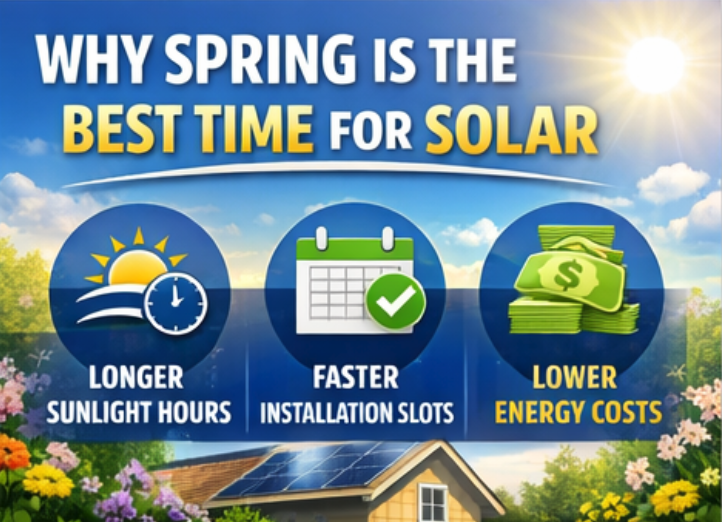
There's a moment every year when the stars align for homeowners thinking about solar, and you're in it right now. Spring brings longer days, milder installer schedules, and a utility billing cycle that rewards early adopters before summer demand peaks. If you've been sitting on the decision, April is the month that rewards action.
"Installing in spring means your system is fully commissioned and optimized before the highest-consumption months of the year."
Leanne Kim, Forme Solar Electric CEO
At Forme Solar Electric, we've commissioned hundreds of residential systems across Southern California, and year after year the data tells the same story: homeowners who install in March through May enjoy a full summer season of maximum output from a system that's already been tuned, tested, and net-metered. By contrast, late-summer installs can miss weeks of peak production during the permitting and interconnection window.
Why Spring Makes Financial Sense
The federal Residential Clean Energy Credit is no longer available, so the financial case for solar now rests squarely on long-term utility savings, rising electricity rates, and California's net metering program. All of which still make solar one of the strongest home investments you can make. The financial picture is especially sharp in spring for a few compounding reasons.
Time-of-Use Billing
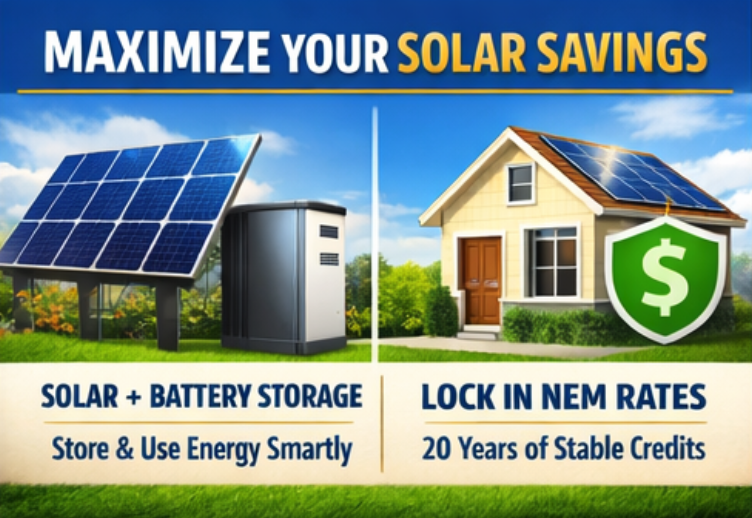
Most Southern California utilities have shifted to time-of-use (TOU) rate structures, where electricity costs considerably more during peak hours (typically 4–9 p.m.). A well-sized solar-plus-battery system can export surplus midday power and draw down stored energy during the expensive evening window. In addition, spring's long days are ideal for building that surplus from day one.
Net Energy Metering in Your Favor
California's current NEM tariff still compensates exported solar energy, and getting onto the program now locks in those rates for 20 years. Systems commissioned in April begin accumulating export credits ahead of peak summer output. Meaning your first true-up cycle arrives in good shape.
What to Look for in an Installer
The solar market has matured significantly, but quality still varies. When evaluating companies, these benchmarks matter:
- Expertise in solar services from removal to repair
- In-house permitting team for faster approvals
- Transparent, fixed-price quotes with no escalation clauses
- Workmanship warranty of 25 years on solar installation
- Monitoring dashboard with real-time production and export data
- References from local installs you can visit or call
What's New in Solar Technology for 2026
Panel efficiency has continued its steady march upward. Today's best solar panels from leading manufacturers are achieving 22–23% efficiency at scale, up from the 19–20% that was considered best-in-class just three years ago. For homeowners with limited roof space, this translates directly to more kilowatts from the same footprint.
Battery storage has also crossed a critical threshold. Second-generation lithium iron phosphate (LFP) batteries now offer better cycle durability, improved thermal stability, and lower per-kilowatt-hour costs than the lithium-nickel-manganese-cobalt (NMC) chemistry that dominated earlier systems. At Forme Solar, our current storage packages are built around LFP chemistry for all residential installs.
Bidirectional EV charging often called vehicle-to-home (V2H) is becoming practical for homeowners who already own a compatible electric vehicle. Paired with a solar system, your EV can act as a whole-home backup during grid outages. Ask us about compatible inverter configurations if you're planning an EV purchase in the next 12 months.
Getting Started: What to Expect a Step-by-Step Solar Install
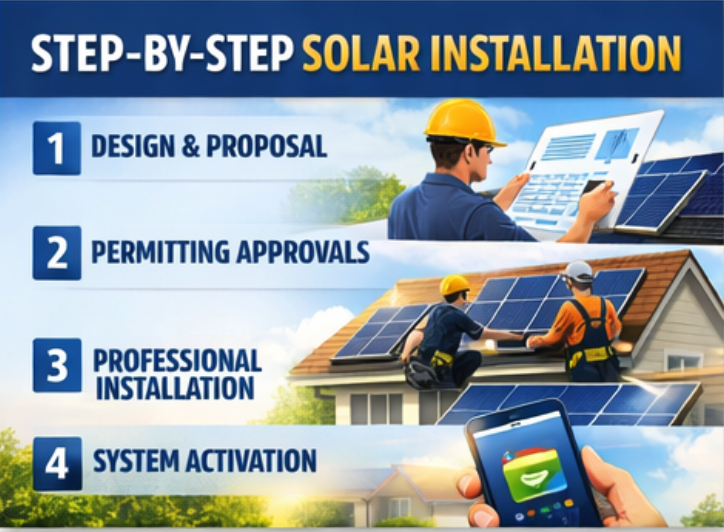
From first conversation to energized system, a typical Forme Solar project runs four to six weeks. Here's how the process flows:
Week 1–2: Design and Proposal
We conduct a roof and energy-use assessment, design a system sized to your actual consumption, and present a clear proposal with no hidden costs. You'll see estimated annual production, payback timeline, and financing options in one document.
Week 2–3: Permitting
Our in-house team handles all permit applications with your local authority having jurisdiction (AHJ) and submits interconnection paperwork to your utility simultaneously to compress the timeline.
Week 3–5: Installation
Most residential systems are installed in one to two days by our own crews, never subcontracted. Inspections are typically scheduled within a week of completion.
Week 5–6: Interconnection and Activation
Once the utility approves interconnection and installs your net meter, your system goes live. We walk you through the monitoring app and make sure you know exactly what you're looking at.
Ready to See Your Numbers?
We'll build a custom proposal for your home. No obligations, no pressure, no sales scripts.
Just honest numbers. Get a Free Solar Assessment
Recent Posts
 FranklinWH aPower 2: What Southern California Homeowners Should Know Before Buying
 Freedom Forever Solar Files for Bankruptcy
 From Solar Installation, HVAC to Roofing: Home Services Done Right
 Forme Solar Recognized as 2025 Top Solar Contractor by Solar Power World
 The Real Cost of Solar: Why Payback Periods Are Shorter Than You Think
 The Next Level in Home Battery Systems? Meet EcoFlow Ocean Pro
 The Government Just Set a HUGE Cloud Over the Solar Industry Why You Need to Act Now
 The Simple Guide to Choosing the Best Solar Panels in 2025
 Ask These 10 Questions Before You Choose a Solar Company
 Should You Get Solar Battery Storage? A Comprehensive Guide to Battery Benefits and ROI
 Sunnova Energy Files for Bankruptcy
 How Many Solar Panels Do You Actually Need? Don’t Waste Your Money
 Tesla Powerwall 3 Overview From a Certified Installer